 (208) 991-3502
 Meridian, ID






 January 15, 2026
Your school needs a reliable way to reach every classroom, gym, and outdoor space with clear announcements and emergency alerts. Maybe your current system crackles with static, or you're setting up a...
PA Systems for Schools (2026): 5 Best Options & Prices
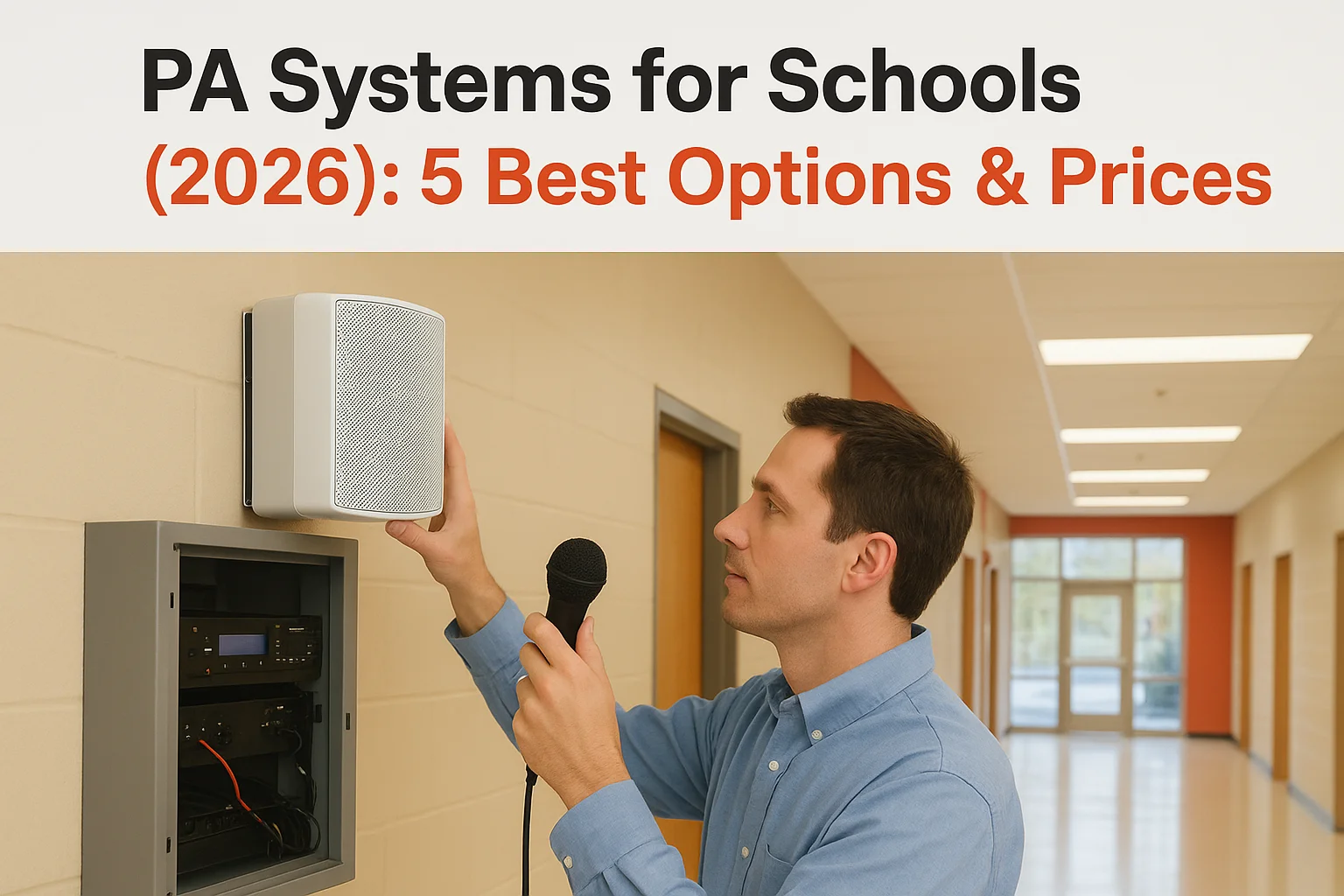
Your school needs a reliable way to reach every classroom, gym, and outdoor space with clear announcements and emergency alerts. Maybe your current system crackles with static, or you're setting up a new building from scratch. Either way, you need PA systems for schools that actually work when you need them, and you need to know what options fit your budget and campus size before making a decision.
This guide breaks down five proven PA system options with real pricing for 2026. You'll see custom integrated systems, budget analog packages, modern IP solutions, portable units for sports fields, and wireless campus setups. Each option includes the key features, best use cases, installation requirements, and honest tradeoffs so you can pick the right system for your school without wasting money on features you won't use.
1. Treasure Valley Solutions custom school PA systems
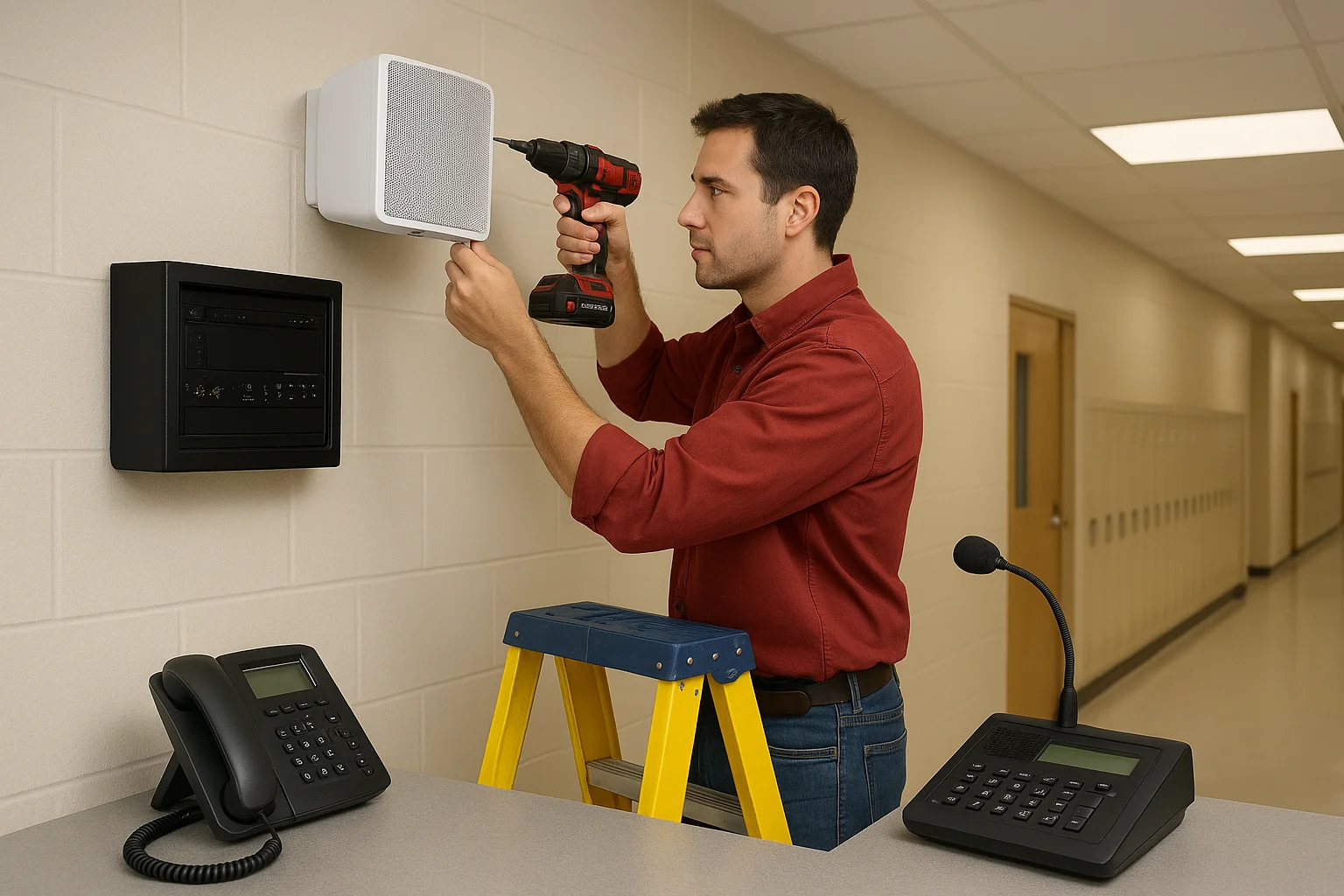
You get a fully integrated PA system designed specifically for your campus layout when you work with Treasure Valley Solutions. This option delivers professional installation with custom programming that connects your paging, bells, emergency alerts, and classroom intercom into one unified system across multiple buildings or a single facility.
Key features and components
Treasure Valley Solutions designs campus-wide PA systems that include strategically placed speakers, central amplification, zone control, and integration with your existing security cameras and access control systems. Your admin staff controls announcements from VoIP desk phones or dedicated paging consoles, and the system scales to include outdoor fields, parking lots, and athletic facilities. Every component gets selected based on your acoustic environment and coverage requirements.
Ideal school size and use cases
This custom approach works best for K-12 districts with multiple buildings, established campuses undergoing renovation, or new construction projects where pre-wiring happens during the build phase. You'll see the most value if you need emergency integration with fire alarms, lockdown systems, or if you want scheduled bell tones that vary by zone or day.
Custom design means you pay only for features your school actually uses, not pre-packaged systems with unnecessary extras.
Installation and integration notes
Treasure Valley Solutions handles complete installation including wire runs, speaker mounting, amplifier rack configuration, and system programming. They coordinate with your builders or facilities team for new construction pre-wiring and provide ongoing support after installation. You get local technicians who respond quickly if adjustments or repairs become necessary.
Pros and trade offs for schools
Your school benefits from tailored coverage with no dead zones and seamless integration with other building systems. The tradeoff is higher upfront investment compared to off-the-shelf packages and longer project timelines for design and installation.
Typical pricing in 2026
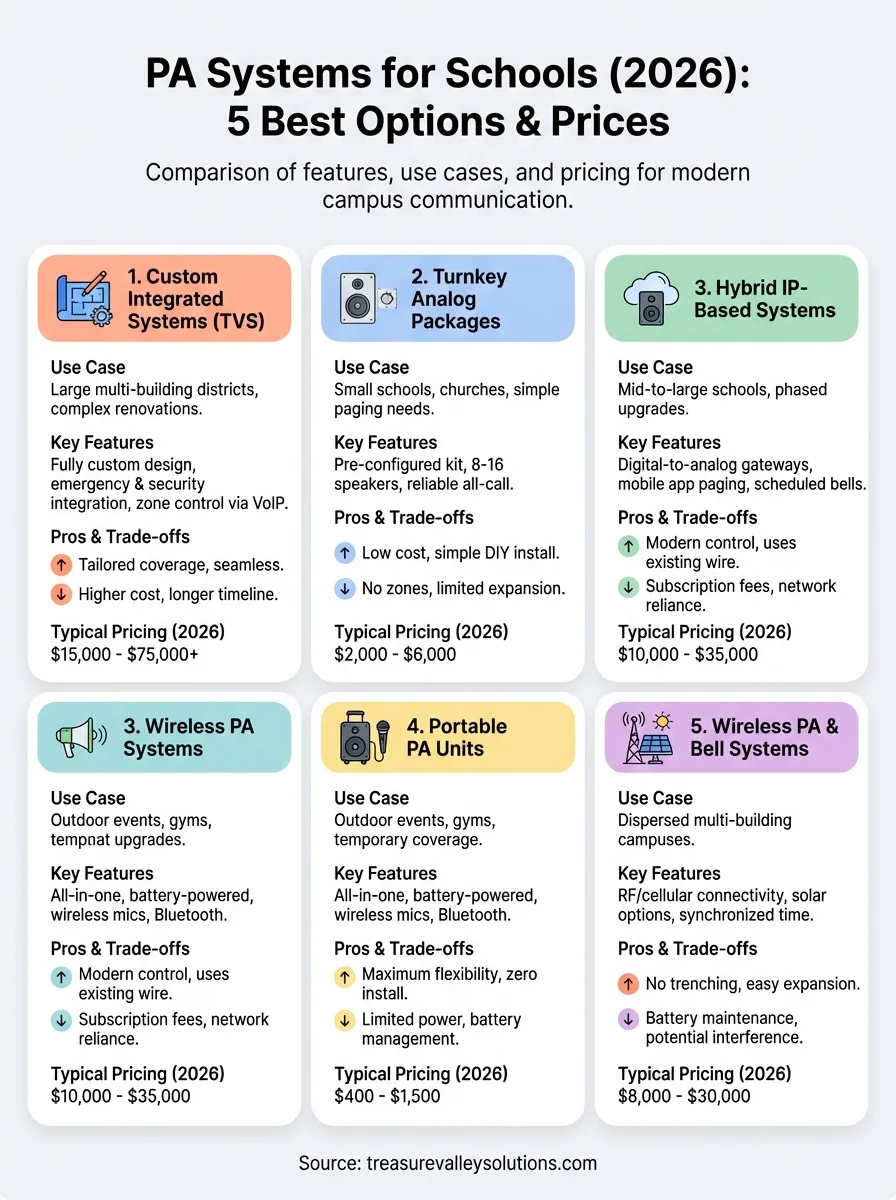
Custom PA systems for schools from Treasure Valley Solutions typically range from $15,000 to $75,000+ depending on campus size, speaker count, and integration complexity. Single building projects start around $15,000, while multi-building campuses with outdoor coverage can exceed $50,000.
2. Turnkey analog PA packages for small schools
Budget-conscious administrators find analog PA systems for schools provide essential paging without breaking the bank. These pre-configured packages include everything needed for single-building coverage: amplifier, wall-mounted speakers, desktop microphone, and basic wiring supplies that your maintenance team or local electrician can install.
Key features and components
Analog packages deliver straightforward functionality with a central amplifier box, 8 to 16 speakers rated for indoor ceiling or wall mounting, one paging microphone station for the office, and manual volume controls. You won't get zone paging or VoIP integration, but you will get reliable all-call announcements that work every time you press the talk button.
Ideal school size and use cases
These systems work best for elementary schools under 20 classrooms, small private schools, or churches with educational wings. Your facility needs simple daily announcements without emergency integration requirements or multiple building coordination.
Installation and integration notes
Most schools complete DIY installation in one to three days using existing ceiling access. You'll need basic electrical knowledge for speaker wire runs and amplifier power connection. Professional installers charge $1,500 to $3,000 for turnkey setup if your staff lacks time or expertise.
Analog systems deliver decades of service with minimal maintenance costs and zero software licensing fees.
Pros and trade offs for schools
Your school saves money upfront and avoids complicated programming or network dependencies. The tradeoff includes no zone control, no emergency system integration, and limited expansion options as your campus grows.
Typical pricing in 2026
Complete analog PA packages cost $2,000 to $6,000 including amplifier, speakers, microphone, and wiring supplies for facilities up to 15,000 square feet.
3. Hybrid IP based paging and intercom systems
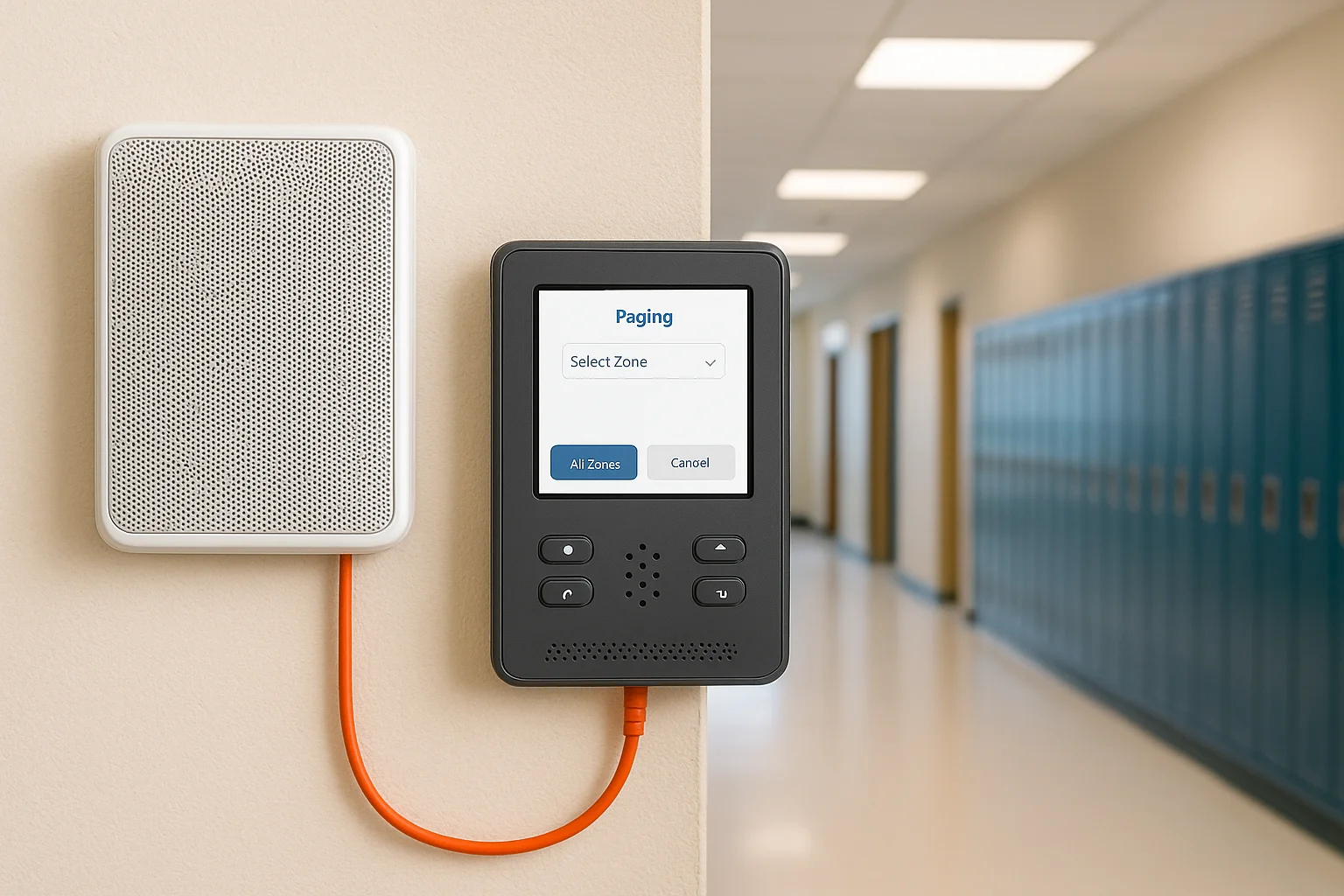
Your school gets the reliability of analog speakers combined with network-based control when you choose hybrid IP paging systems. These systems connect traditional ceiling speakers to an IP-enabled amplifier or gateway, letting you manage announcements through web browsers, mobile apps, or VoIP phones instead of being stuck at a single microphone station in the office.
Key features and components
Hybrid systems include digital to analog gateways that convert network signals to speaker-level audio, cloud-based management dashboards, smartphone paging apps, and scheduled bell programming with calendar integration. You maintain your existing speaker infrastructure while gaining zone-specific paging, emergency pre-recorded messages, and integration with fire alarm panels or lockdown systems. Your staff pages from desk phones or designated mobile devices throughout the campus.
Ideal school size and use cases
These systems serve middle schools and high schools with 20 to 60 classrooms across single or multiple buildings. Your campus benefits most if you need flexible paging zones for different bell schedules, remote announcement capability during emergencies, or phased upgrades where you replace analog components gradually while keeping the network backbone.
Hybrid systems let you upgrade incrementally without replacing every speaker on day one.
Installation and integration notes
Professional installers connect IP gateways to your existing analog speaker wiring and configure network settings for remote access. You need reliable network infrastructure with power over Ethernet capability and sufficient bandwidth. Installation typically takes three to five days for multi-building campuses.
Pros and trade offs for schools
Your school gains modern control features while preserving speaker investments and avoiding complete system replacement costs. The tradeoff includes ongoing software subscription fees for cloud management platforms and dependency on network stability for system operation.
Typical pricing in 2026
Hybrid pa systems for schools cost $10,000 to $35,000 for complete installations including gateways, licensing, configuration, and integration with existing speakers across campuses up to 40,000 square feet.
4. Portable PA systems for gyms and fields
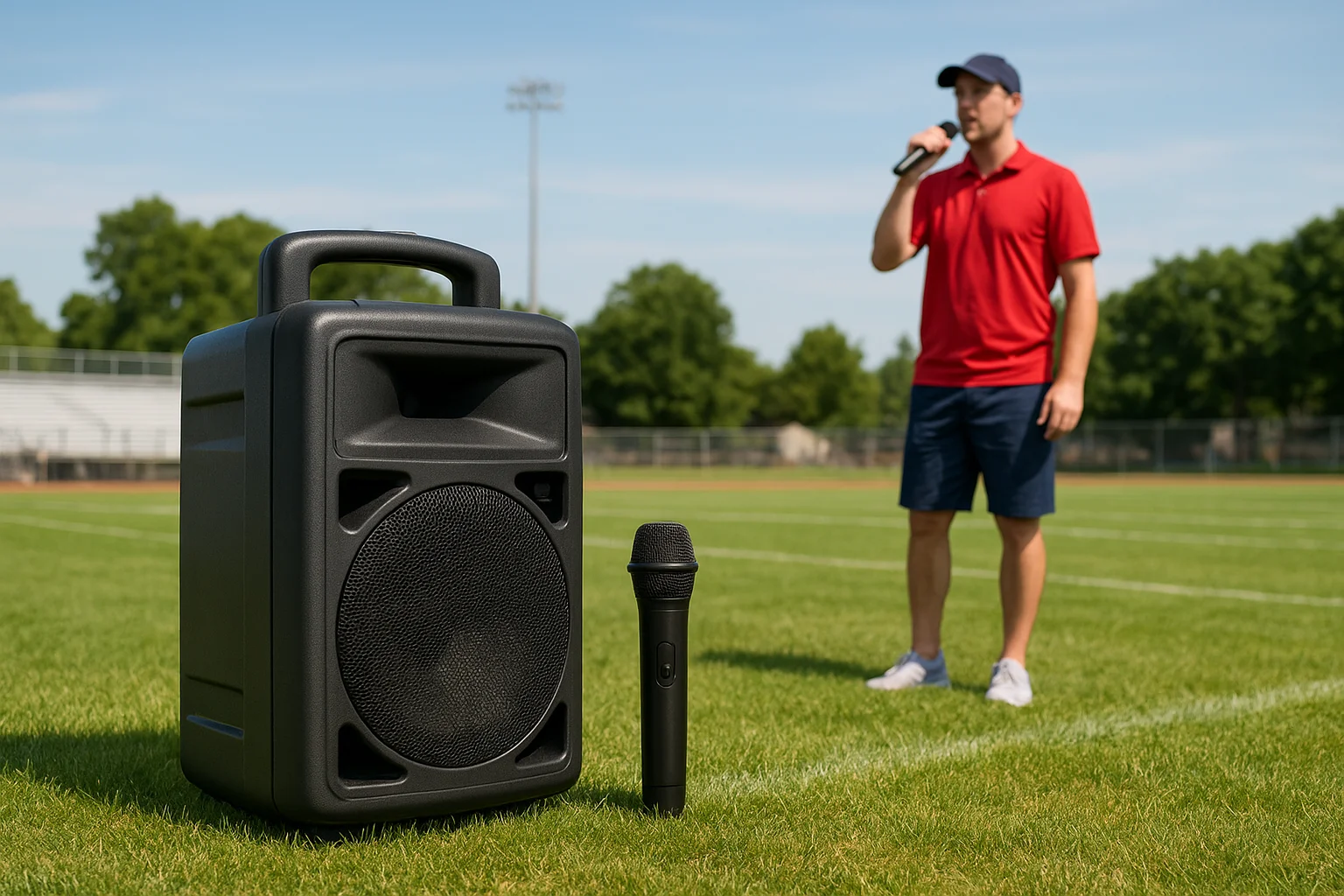
Your school needs mobile announcement capability for outdoor sporting events, pep rallies, and emergency situations away from main buildings. Portable PA systems deliver rechargeable battery power with wireless microphone options that move wherever your activities happen without running extension cords or finding wall outlets.
Key features and components
These systems include all-in-one speaker units with built-in amplifiers, wireless handheld or headset microphones, rechargeable batteries lasting six to eight hours, and Bluetooth connectivity for playing music or announcements from smartphones.
Ideal school size and use cases
Portable units serve any school size for athletic events, outdoor graduations, physical education classes, or parking lot dismissal procedures. Your activities department and coaches transport these systems to football fields, baseball diamonds, or any outdoor space requiring temporary audio coverage.
Installation and integration notes
You get zero installation requirements since portable systems operate independently. Staff members charge units overnight and transport them as needed without IT department involvement.
Portable PA systems eliminate permanent installation costs while delivering professional audio quality for temporary events.
Pros and trade offs for schools
Your school gains maximum flexibility for event coverage. The tradeoff includes limited speaker power compared to permanent installations and battery management responsibility.
Typical pricing in 2026
Quality portable pa systems for schools cost $400 to $1,500 per unit depending on power output and microphone options.
5. Wireless PA and bell systems for campuses
Your multi-building campus eliminates expensive trenching when you choose wireless PA systems using radio frequency or cellular connectivity. These systems synchronize announcements and bell schedules across dispersed facilities without underground cables.
Key features and components
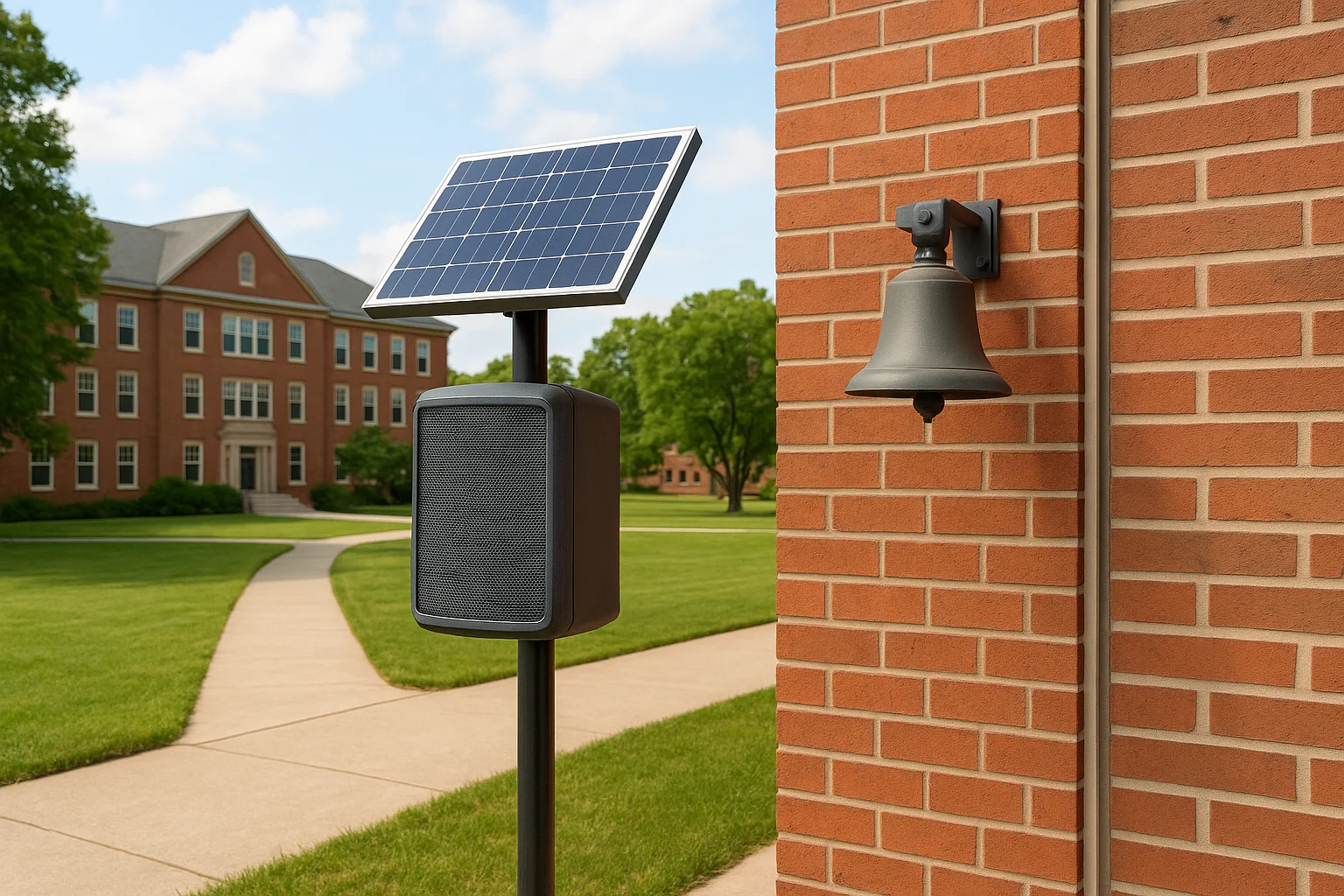
Wireless systems include solar-powered outdoor speakers, battery-backed indoor units, central transmitters, and cloud scheduling software. Your system maintains synchronized time campus-wide and triggers bell tones from one control point.
Ideal school size and use cases
These solutions serve large campuses with buildings separated by parking lots or athletic fields where traditional wiring becomes prohibitive. Your district benefits when adding buildings or connecting portable classrooms.
Installation and integration notes
Installers mount wireless receivers in each building and configure central transmitters without trenching between structures. You need clear line-of-sight for RF systems or cellular data plans for cloud-connected units.
Pros and trade offs for schools
Your school avoids underground wiring costs and simplifies campus expansion projects. The tradeoff includes battery maintenance and potential signal interference.
Wireless systems reduce installation costs by up to 60% compared to wired solutions for multi-building campuses.
Typical pricing in 2026
Wireless pa systems for schools cost $8,000 to $30,000 depending on building count and coverage area.
Moving forward
Your school deserves clear communication across every building and outdoor space without overspending on unnecessary features. Each of these five pa systems for schools serves different campus sizes and budget levels, from simple analog packages under $6,000 to fully integrated custom solutions exceeding $50,000. You now have the pricing ranges and feature comparisons needed to present options to your administration or board.
Start by measuring your campus coverage requirements and identifying your must-have features like emergency integration or zone paging. Schools in the Treasure Valley area can schedule a free consultation to walk through specific needs and get accurate quotes. Contact Treasure Valley Solutions today for a custom assessment of your facility and detailed pricing based on your actual classroom count, building layout, and integration requirements.